
Little Chauchat
by Tiffany M. Skidmore
Jeff Siegfried, baritone
Kyle Hutchins, bass clarinet
Émilie Fortin, trumpet
Riley Leitch, trombone
Irrational
by Chaya Czernowin
Jeff Siegfried, baritone
Kyle Hutchins, bass clarinet
Émilie Fortin, trumpet
Riley Leitch, trombone
pause
Pierrot Lunaire
by Arnold Schönberg
Anthony R. Green, sprechstimme
Dalia Chin, flute
Jeff Siegfried, clarinets
Maya Bennardo, violin/viola
Rebeccah Parker Downs, cello
Shannon Wettstein, piano
Kyle Hutchins, conductor
Text Translation and Notes by Anthony R. Green
Tiffany M. Skidmore
Tiffany M. Skidmore is an American composer and performer based in Columbia, Missouri, where she is currently Associate Director of the Mizzou New Music Initiative. She has held faculty positions at the University of Minnesota - Twin Cities, Virginia Tech, and the University at Buffalo (SUNY), where from 2023-2024, she held the Birge Cary Chair in Music Composition. Most recently, she was a Visiting Professor at McGill University, in residence at CIRMMT (the Centre for Interdisciplinary Research in Music Media and Technology). She is Co-Founder, Executive Director, and Co-Artistic Director of the Twin Cities-based 113 Composers Collective, an organization that produces the Twin Cities New Music Festival, as well as concerts and guest artist residencies throughout the world.
Dr. Skidmore has received numerous awards for her work from organizations such as the Schubert Club, the Jerome Foundation, the Foundation for Contemporary Arts, Rimon, and Opus7. She was a 2017 John Duffy Institute for New Opera Fellow, a 2018 McKnight Composer Fellow, and the 2018-2019 Zeitgeist New Music Ensemble Composer-in-Residence. Her chamber, choral, and orchestral work has been interpreted by acclaimed experimental music specialists throughout the United States, Europe, and Colombia, including Kyle Hutchins, Tiffany Du Mouchelle, Talea, TAK, loadbang, andPlay, Bent Duo, Fonema Consort, Ensemble Dal Niente, Duo Gelland, and many others. Her work has been featured in national and international festivals, including the US Navy Band International Saxophone Symposium, the International Clarinet Association Festival, the MN Made Festival, the Shockingly Modern Saxophone Festival, the Virginia Tech New Music + Technology Festival, the New York City Electronic Music Festival, the OpenAir Festival (Sweden), the Open Days Festival (Denmark), and the World Saxophone Congress (Gran Canaria), among others. She is on the composition faculty of the Vienna Contemporary Composers Festival, the Sofia Symphonic Summit, and the Veneto Art and Music Summit.
Dr. Skidmore holds degrees in Music Composition and Vocal Performance from Gonzaga University, Eastern Washington University, and the University of Minnesota, where she studied with James Dillon and theorist Michael Cherlin, followed by post-doctoral studies with Chaya Czernowin. Her music may be heard on the New Focus and Neuma Records recording labels.
Soprano Nina Dante writes that “Tiffany Skidmore’s music brings to mind Sciarrino’s description of his own music: hearing it is like watching a volcano erupt from afar. While Skidmore’s music burns its own path outside of Sciarrino’s aesthetic, the description holds true. Her music often features slow moving textures dotted with energetic events (imagine a constellation moving across the sky over the course of the year, and interjecting shooting stars), a starry sound world, coldly emotional content, and a mix of musical abstraction with direct theatrical/conceptual content. For these reasons, like reading a myth of ancient times, we experience the drama of her works from a distance.”
As a performer, Skidmore has sung professionally with the Spokane and Coeur d’Alene Opera companies, Spokane Symphony Chorale, the Minnesota Chorale, the Contemporary Music Workshop, Hymnos Vocal Ensemble, the Gregorian Singers, the 113 Composers Collective, and as a free-lance artist, primarily performing early and experimental music.
Maya Bennardo
Maya Bennardo (she/her) is an active performer and composer living in Stockholm, Sweden. Maya is interested in opening the dialogue and blurring the boundaries between composers and performers, and is devoted to performing music of the present. She is a founding member of the violin/viola duo andPlay, described by I Care If You Listen as “enthusiastic champions for new music and collaboration.” She performs new and traditional repertoire for violin and piano with pianist Karl Larson in their Bennardo-Larson Duo, and was a member of the internationally renowned Mivos Quartet.
Maya recently released her first solo record, ‘four strings’ with music by Eva-Maria Houben and Kristofer Svensson which was released on the kuyin label, September 2022 (named as one of The Best of Contemporary Classical 2022 on Bandcamp and one of Steve Smith’s 22 for ‘22). The album is a continuation of Bennardo’s work exploring sonic fragility and temporal stasis on the violin.
Maya is a sought-after chamber musician and soloist, and recent highlights include recording residencies at Electronic Media and Performing Arts Center (EMPAC) in Troy, NY and at the Elektronmusikstudion (EMS) in Stockholm, Sweden and performances at Darmstadt International Music Institute (DE), Huddersfield Contemporary Music Festival (UK), Wien Modern (AT), Sound of Stockholm (SE), at the Library of Congress on the “Betts” Stradivarius violin (Washington D.C.), Walt Disney Hall on Noon to Midnight (Los Angeles, CA), Lucerne Festival Academy with Saul Williams (Lucerne, CH), North Sea Jazz Festival with Ambrose Akinmusire (Rotterdam, NE), June in Buffalo (Buffalo, NY), and Lincoln Center Festival (NYC). She has had releases on Deutsche Grammophon, Kairos, Another Timbre, kuyin, Nonesuch Records, New Focus Recordings, New World Records, Thanatosis, and others.
As a guest artist and educator, Maya has given performances and worked with students at universities around the world, including Kungliga Musikhögskolan (KMH), Berklee College of Music, Northwestern University, University of Chicago, Tulane University, Columbia University, Harvard University, Hong Kong University, Brigham Young University, Boston Conservatory, University of California, Santa Cruz; University of California, San Diego; and University of Texas, Austin.
Maya's compositions are characterized by slow, unfolding timbral movements--exploring the co-existence of pitch and noise. Her compositions have grown naturally out of her improvisational practice on the violin, and the two continue to inform each other. Recently, Maya has composed new works for NoExit + andPlay, Lamnth, Alkemie + Amanda Gookin, Bennardo-Larson Duo, and a new long-form solo work for violin, and this season she is writing a new work for solo cello for Thea Mesirow, solo bandoneón for James Parker, and a piano, bass, percussion trio for NYC-based Bearthoven.
She graduated from NYU with a Master of Music and the Oberlin Conservatory of Music with a Bachelor of Music studying with Gregory Fulkerson at both institutions. Apart from performing, Maya enjoys a rich teaching life in her private studio. She performs on a modern instrument made by the late Tetsuo Matsuda.
Jeff Siegfried
Saxophonist Jeff Siegfried combines a “rich, vibrant tone” (South Florida Classical Review) with “beautiful and delicate playing” (Michael Tilson Thomas) to deliver “showstopper performances” (Peninsula Reviews). Hailed for his “quicksilver” interpretations (I Care if You Listen), Siegfried has become an important voice in his generation of concert saxophonists.
Siegfried has been honored at numerous international competitions. He has received first prize at the Luminarts Fellowship Competition and the Frances Walton Competition and was runner up in the Carmel Music Society Competition, the North American Saxophone Alliance Quartet Competition, and the Music Teachers National Association Chamber Music Competition. He is the recipient of the 2016 Hans Schaeuble Award.
Siegfried has appeared as a featured soloist with the U.S. Army Band “Pershing’s Own,” the University of Portland Wind Ensemble, the Oregon State University Wind Ensemble, and the Northwestern University Contemporary Music Ensemble. He has also appeared as an orchestral saxophonist with the Chicago Symphony Orchestra, the New World Symphony, the Schleswig-Holstein Musik Festival, and Spoleto Festival, USA. His recording credits appear on Parma, Mark Records, and Parlour Tapes.
As a champion of new music, Siegfried has commissioned many works for the saxophone. He has collaborated with numerous composers, including Matthew Browne, Nicholas Cline, Joey Crane, Gala Flagello, Sean Friar, Elliott McKinley, Clara Olivares, Joan Arnau Pàmies, Robert Reinhart, David Reminick, Karalyn Schubring, Gregory Wanamaker, Eric Wubbels, Katherine Young, and Daniel Zlatkin.
Siegfried is also an active scholar in the field of musicology. His scholarly interests included 20th century Jewish art music, Yiddishkayt, music and politics, performance studies, and the critical organology of the saxophone. He has presented his research at numerous international conferences from Brussels to Budapest.
Siegfried has collaborated with chamber ensembles from around the world. His saxophone sextet, The Moanin’ Frogs, has received considerable international acclaim and competitive success. His saxophone quartet, the Estrella Consort, has performed for diverse audiences from Ecuador to Tennessee. He has appeared with other award-winning ensembles, including casalQuartett and the Fonema Consort.
Siegfried holds masters degrees in saxophone and in musicology from Northwestern University and a doctorate in saxophone with certificates in musicology and in performance studies from the University of Michigan. His principal teachers are Timothy McAllister and Andrew Bishop. He is a Selmer Artist-Clinician and plays Selmer saxophones and mouthpieces exclusively. Siegfried serves as Assistant Professor of Saxophone at West Virginia University.
Riley Leitch
William Riley Leitch is a Chicago area trombonist. Riley has performed at the Nief Norf Festival, soundSCAPE Festival, and the Lucerne Festival Academy where he studied with members of Ensemble Intercontemporain and Ensemble Modern. Riley has premiered over 30 new works for solo trombone, chamber ensemble, and orchestra at events and venues such as Ear Taxi Festival and Red Note New Music Festival. He is currently commissioning new works for trombone that cross traditional disciplinary boundaries.
Chaya Czernowin

Chaya Czernowin is a major, distinctive voice in new music on both sides of the Atlantic.—Andrew Clements 3/18/ 2021 The Guardian UK
One of the most fearless and most sensual composers of the present.— Christine Lemke-Matwey 11/21/2019 DIE ZEIT
Czernowin composes the negative beauty of disaster; it is the musical equivalent of Picasso’s “Guernica” or Anselm Kiefer’s “Margarethe.”— Alex Ross 8/27/2018 The New Yorker
Chaya Czernowin was born and brought up in Israel. After her studies in Israel, at the age of 25, she continued studying in Germany (DAAD grant), the US, and then lived in Tokyo, Japan (Asahi Shimbun Fellowship and American NEA grant), and in Germany (a fellowship at the Akademie Schloss Solitude). Her music has been performed throughout the world, by the best orchestras and performers of new music, and she has held a professorship at UCSD and was the first woman to be appointed as a composition professor at the University of Music and Performing Arts in Vienna, Austria (2006–2009), and at Harvard University, USA (2009 -to the present) where she has been the Walter Bigelow Rosen Professor of Music. Together with Steven Kazuo Takasugi and Jean-Baptiste Jolly, the director of Akademie Schloss Solitude near Stuttgart, she has founded the summer Academy at Schloss Solitude, a biannual course for composers, 2003- 2019. Takasugi and Czernowin also taught at Tzlil Meudcan, an international course based in Israel founded by Yaron Deutsch of Ensemble Nikel.
“Vital, visceral, wild and undefined as experience itself – can music be that? I have heard such music, rarely, but, it has changed my life. Attempting to work towards it, though, is a difficult balancing act: one must be as sensually sensitive as if one has no skin, while exercising the analytical clarity, precision and focus of holding a surgeon’s knife.”
— CHAYA CZERNOWIN
Czernowin’s output includes chamber and orchestral music, with and without electronics. Her works were played in most of the significant new music festivals. She composed 4 large scale works for the stage: Pnima...ins Innere (2000, Munich Biennale) chosen to be the best premiere of the year by Opernwelt yearly critic survey, and received the prestigious Bayerischer Theaterpreis; Adama (2004/5) with Mozart's Zaide (Salzburg Festival 2006) Adama has a second version written with Ludger Engles, with an added choir which was presented in Freiburg Stadttheater (2017). The opera Infinite Now was written in 2017, a commission of Vlaamse Opera Belgium, IRCAM Paris, and Mannheim Stadtheater. The piece combines/ superimposes materials of the first world war (Luk Perceval's theater piece "FRONT") with the short story Homecoming by Can Xue. This opera was chosen as the premier of the year in the international critics’ survey of Opernwelt. In 2018/2019 Czernowin Wrote the text and music to Heart Chamber which was premiered and commissioned by the Deutsche Oper Berlin, in the direction of Claus Guth to a strong critical and public acclaim. Czernowin was appointed Artist in residence at the Salzburg Festival in 2005/6 and at the Lucern Festival, Switzerland in 2013, and at Huddersfield Festival 2021.
Characteristic of her work are working with metaphor as a means of reaching and analyzing a sound world that is unfamiliar; the use of noise and physical parameters as weight, textural surface (as in smoothness or roughness, brightness or darkness); an inquiry of the handling of time; and shifting of scale. and perspective. These ways of working/thinking fuse her work with multi-sensory content and work to reach a sonic expression which includes the subconscious and goes beyond style, conventions, or rationality.
In addition to numerous other prizes, Czernowin represented Israel at Uncesco composer's Rostrum 1980; was awarded the DAAD scholarship ('83–85); Stipendiumpreis ('88) and Kranichsteiner Musikpreis ('92), at Darmstadt Fereinkurse; IRCAM (Paris) reading panel commission ('98); scholarships of SWR experimental Studio Freiburg ('98, '00, '01 and more); The composer’s prize of Siemens Foundation ('03); the Rockefeller Foundation, ('04); a nomination as a fellow to the Wissenschaftkolleg Berlin ('08); Fromm Foundation Award ('09); and Guggenheim Foundation fellowship ('11); Heidelberger Kunstlerinen Preis ('16); The WERGO portrait CD The Quiet (5 orchestral pieces) has been awarded the Quarterly German Record Critics’ Award ('16 ). She was chosen as a member of the Akademie der Kuenste in Berlin in 2017, and as a member of the Bavarian Academy of Fine Arts, Munich in 2021. In 2022 She was awarded the Gema Authors prize in the Musiktheater (new opera) category.
Czernowin's work is published by Schott. Her music is recorded on Mode records NY, Wergo, Col Legno, Deutsche Gramophone, Kairos, Neos, Ethos, Telos Naxos, and Einstein Records. She lives near Boston with composer Steven Kazuo Takasugi. Czernowin is an Israeli/ American Citizen.
Anthony R. Green

The creative output of Anthony R. Green (b. 1984; composer, performer, social justice artist) includes musical and visual creations, interpretations of original works or works in the repertoire, collaborations, educational outreach, and more. Behind all of his artistic endeavors are the ideals of equality and freedom, which manifest themselves in diverse ways in a composition, a performance, a collaboration, or social justice work.
As a composer, his works have been presented in over 25 countries across six continents by various internationally acclaimed soloists and ensembles, including : vocalists Anthony P. McGlaun, Julian Otis, Anna Elder, and Amanda DeBoer Bartlett; violists Ashleigh Gordon, Gregory Williams, Carrie Frey, and Wendy Richman; pianists Stephen Drury, Kathleen Supové, Jason Hardink, Kimi Kawashima, Lewis Warren Jr., Clare Longendyke, Hayk Melikyan, and Eunmi Ko; cellists Matthieu D’Ordine, Patricia Ryan, and Ifetayo Ali-Landing; percussionists Bill Solomon, Michael Skillern, and Dame Evelyn Glennie; saxophonists Neal Postma, Benjamin Sorrell, and Kendra Williams; and ensembles Tenth Intervention (Hajnal Pivnick – violin, and Adam Tendler – piano), ALEA III (with Gunther Schuller, conductor), the Thalea String Quartet, counter)induction, Ensemble Dal Niente, Dinosaur Annex, andPlay, NorthStar Duo, fivebyfive, Transient Canvas, the McCormick Percussion Group, the Icarus Quartet, Opera Kansas (as winner of the 2018 Zepick Modern Opera Contest), the American Composers Orchestra, the Lowell Chamber Orchestra, the Boston Landmarks Orchestra, the Minnesota Philharmonic, the String Archestra, the Playground Ensemble, Ossia New Music Ensemble, and Alarm Will Sound, to name a few. He has received commissions from the Fromm Foundation (a 2021 commissioned composer), Community MusicWorks, Make Music Boston, Celebrity Series Boston, Chamber Music Tulsa, Access Contemporary Music, the Left Coast Chamber Ensemble, Boston University (for the 2023 Richmond Piano Competition), the Texas Flute Society (for the 2021 Myrna Brown Competition), NOISE-BRIDGE duo, Ghetto Classics (for the 2022 Kenya International Cello Festival), and various other soloists and ensembles. In 2021, three portrait concerts featuring his music were presented digitally by Boston University, and in live concerts at UMKC - presented by the saxophone studio, and in St. Paul, Minnesota - presented by the 113 Composers Collective. A fourth portrait concert featuring vocal works will be presented in December 2022 at the Longy School of Music in Cambridge, MA. He has been a resident artist at the Kimmel Harding Nelson Center for the Arts (Nebraska), Virginia Center for the Creative Arts, Escape to Create (Florida), Visby International Centre for Composers (Sweden), Space/Time (Scotland), atelier:performance (Germany), the Bemis Center for Contemporary Arts (Nebraska), Gettysburg National Military Park (through the National Parks Arts Foundation), and the perfocraZe International Artist Residency (Ghana). Upcoming residencies include the Atlantic Center for the Arts (Florida) and Loghaven (Tennessee).
As a performer, he has appeared at venues in the US, Cyprus, France, the Netherlands, the UK, Israel, Germany, Norway, Switzerland, Turkey, South Korea, and Ghana, premiering original works and working with student, emerging, and established composers such as David Liptak, Renée C. Baker, and George Crumb for various performance presentations. Green has participated in consortium commissions organized by Neal Postma (saxophone), Meraki (clarinet and piano duo), and New Works Project (solo percussion). His music has been performed at Symphony Space (New York), Marian Anderson Theater at Aaron Davis Hall (New York), the DiMenna Center (New York), Jordan Hall (Boston), Tivoli Vredenburg (Utrecht), Kunstraum (Stuttgart), Cité de la Musique et de la Danse (Strasbourg), the Shoe Factory (Nicosia), the TWA Hotel (New York), the Edward A. Hatch Memorial Shell on the Charles River Esplanade (Boston), and the Elbphilharmonie (Hamburg), amongst many others. Selections of Green’s music and performances are on CDs and DVDs on the Navona, Ravello, Stone, and Innova labels. His recent engagement in performance art and divergent theater has yielded presentations of such works in Berlin (Spike Gallery), New York City (Union Square for the Art in Odd Places Normal Project, 2021; JACK in Brooklyn for the 2021 Radical Acts Festival), Oslo (Kulturkirken Jakob for the Periferien “SITES AND SOUNDS” project), and in Kumasi, Ghana. Other visual and sonic art projects have been presented at Galerie Wedding (Berlin), Federation Square (Melbourne), Monkey Bar (Hannover), Alliance Francaise Kumasi, the Tampa Museum of Art, the Milwaukee Art Museum, and venues in Malaysia, Venezuela, Spain, and more.
Through music, text, and entrepreneurship, Green comments on many issues related to social justice. Such issues have included: immigration (Earned - narrator & double string quartet), civil rights (Dona Nobis Veritatem - soprano, viola, & piano), the historical links between slavery and current racial injustice in the US (Oh, Freedom! - spoken word, voice, flute, viola, cello), the contributions of targeted and/or minority groups to humanity (A Single Voice: Solitary, Unified - solo alto sax & fixed media), and more. His ongoing opera-project Alex in Transition highlights the life of Alex - a trans woman - and her journey to truth and authentic living. This opera has been featured in the Ft. Worth Opera Frontiers Festival, presented by New Fangled Opera and One Ounce Opera, and performed in a concert production at the Israel Conservatory of Music in Tel Aviv. For the Concord Revisited Project, organized by pianists Jason Hardink and Kimi Kawashima at Westminster College (Salt Lake City), Green composed The Baldwin Sonata : a concert-length piano sonata celebrating and musically analyzing the life, legacy, philosophy, and text of the legendary James Baldwin. Other social justice works include: short cabaret operas, which are comedic-yet-piquant critiques on capitalism via corporations (one of which was premiered by Strange Trace for their 2021 Stencils Festival); His Mind & What He Heard in Central Park in the Late 90s for solo voice, concerning a gay Black man’s encounters with queer racism and toxic exotification (premiered by Anna Elder at the 2019 Conference: Music & Erotics at the University of Pittsburgh); To Anacreon in the US for solo piano, concerning nationalism - especially US “patriotism” (premiered by Aristo Sham at New England Conservatory, with subsequent performances by Kathleen Supové at Barge Music, Clare Longendyke at the Mostly Modern Festival, and more); the sax quartet Almost Over, a musical symbol of Black history in the United States (featured in the 2017 Grachten Festival in Amsterdam and the 2017 Gaudeamus Music Week in Utrecht); rest - reflect - reignite, a video work exploring Black rest, inspired by the Nap Ministry (commissioned by the Cleveland Uncommon Sound Project for the Re:Sound 2021 Festival); Piano Concerto: Solution, sonifying and visualizing the power of women (commissioned by the McCormick Percussion Group; presented at the University of South Florida in Tampa, and the Milwaukee Art Museum presented by Present Music); and I Returned. I wanted to., a video work examining Black joy, Black queerness, Christianity in Africa, and more (commissioned by CAP UCLA for the 2021 Tune In Festival), amongst others. Publications include text for New Music Box, TEMPO (Cambridge University), Archive Books, Positionen magazine (Berlin), and more.
Green’s most important social justice work has been with Castle of our Skins : a concert and education series organization dedicated to celebrating Black artistry through music. Co-founder, associate artistic director, and composer-in-residence, his work with Castle of our Skins has included concert/workshop curation and development, community outreach, lecturing about the history and politics concerning Black composers of classical music, commissioning and supporting young, emerging, and established composers, curating the BIBA (Beauty in Black Artistry) Blog, and more. The current 10th season will be his final season with CooS, after which he will transition to director emeritus, occasional consultant, and lifelong friend.
His primary teachers include Susan Kelley, Dr. Donald Rankin, and Maria Clodes-Jaguaribe for piano, and Dr. Martin Amlin, John Drumheller, Theodore Antoniou, Lee Hyla, and Dr. Robert Cogan for composition. He has participated in masterclasses with Laura Schwendinger, Paquito D’Rivera, Walter Zimmermann, Jonathan Harvey, the Fidelio Trio, and the JACK Quartet, amongst others. His solo and collaborative work has been recognized by grants from Meet the Composer, the Argosy Foundation, New Music USA, and the American Composers Forum as a McKnight Visiting Composer, among others. A passionate educator, Green has given courses, workshops, lectures, and studio visits at numerous institutions, including Walker West Music Academy, Boston University, the Longy School of Music, the Piet Zwart Instituut, the Oslo National Academy of the Arts (KHiO), UC Santa Cruz, the Eastman School of Music, Northwestern University, the Gotland School of Music Composition (Gotlands Tonsättarskola), Westminster College, the University of Milwaukee, and Columbia University. He has served on the faculty for the Sewanee Music Festival, Project STEP summer program, Really Spicy Opera’s Aria Institute, the Alba Music Festival Composition Program, and the Vienna Summer Music Festival’s Composers Forum. An avid thought contributor, he has appeared on panels concerning various subjects for the Wellesley Composers Conference, the 2020 New Music Gathering (along with Angélica Negrón, Daniel Bernard Roumain, and more), and most recently for the 2022 WASBE Conference in Prague (along with Jennifer Higdon and David T. Little, and more), among others. He has also taught various subjects and given private composition lessons at the Universität der Künste Berlin, the University of Colorado at Boulder, and the University of Hartford’s Hartt School of Music, Theater, and Dance. He is a 2021 graduate fellow (alumnus) of the Berlin Centre for Advanced Studies in Arts and Science (BAS) at the Berlin University of the Arts graduate school (Graduiertenschule), and also holds degrees from New England Conservatory and Boston University.
Green was born on Nacotchtank land (Arlington, VA) and raised on Narragansett and Pauquunaukit land (Providence, RI) in a country named by violent Europeans and built significantly by the labor of the enslaved. He currently splits his time mostly between the US and Europe, with ever-increasing travel to Africa. He is married to his occasional piano duo partner and forever husband Dr. Itamar Ronen.
Kyle Hutchins
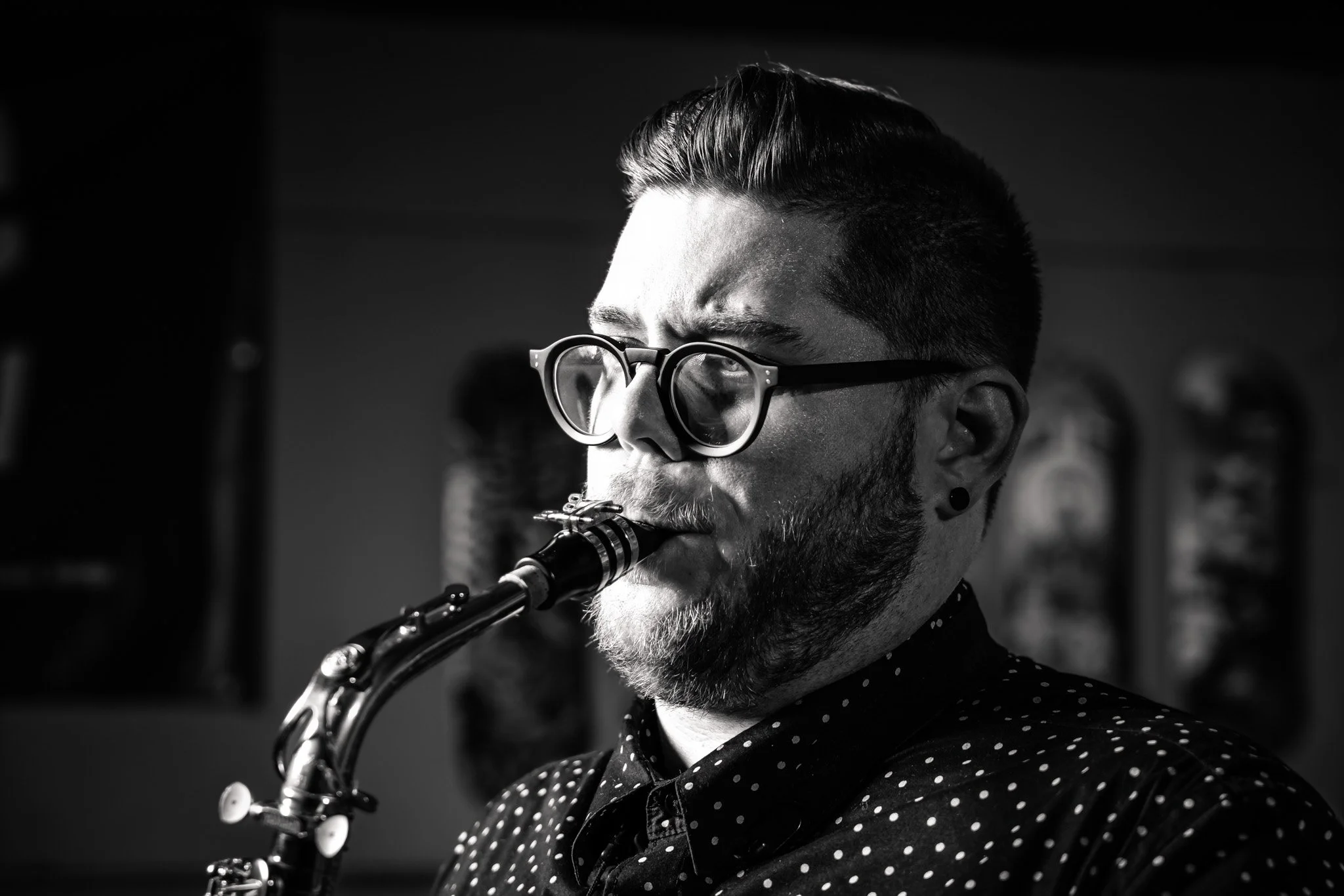
Kyle Hutchins is an experimental performance artist, composer, improviser, and educator who pushes sonic boundaries. Called “epic” (Jazz Times) and “gripping” (Star Tribune), his music has been heard at Carnegie Hall, The Walker Art Center, National Sawdust, and major festivals in over twenty countries across five continents, including the World Saxophone Congress, Internationales Musikinstitut Darmstadt, and the International Computer Music Conference. His fearless approach has been recognized with awards and support from DOWNBEAT, New Music USA, The American Prize, and Virginia’s “40 Under 40” from The Roanoker Magazine (2024).
A driving force in experimental and electroacoustic music, Kyle has premiered more than 350 new works and appears on over 40 commercial recordings. He’s a core member of 113 Composers Collective, Fonema Consort, and Strains Ensemble, and has collaborated with leading figures including Pauline Oliveros, George Lewis, Chaya Czernowin, James Dillon, Michael Pisaro, Steven Kazuo Takasugi, Claire Chase, Richard Barrett, and Douglas Ewart. Longstanding partnerships with artists like The Honourable Elizabeth A. Baker, Ted Moore, Tiffany M. Skidmore, Emily Lau, Charles Nichols, and Eric Lyon have fueled projects that blur the lines between chamber music, noise, and multimedia art.
Described as “part of electroacoustic improv’s well-hewn dynasty” (Downtown Music Gallery), Kyle’s improvisations are “undoubtedly brave” (Issues Magazine) and “frankly unsafe” (I Care If You Listen). His projects—including Binary Canary, Kill All Kings, and Banshee—draw on free jazz, noise, and punk, with recordings on Carrier, Lurker Bias, Noise Pelican, and Mother Brain.
Kyle has been a guest artist and educator at major institutions worldwide, including Stanford University, California Institute of the Arts (CalArts), New York University, Manhattan School of Music, University of California – Los Angeles, Michigan State University, Arizona State University, McGill University, University of British Columbia, Shanghai Conservatory, University of North Texas, Conservatorio di Musica Santa Cecilia (Rome), University of St Andrews, University of Limerick, Zagreb Academy of Music, Hanyang University (South Korea), Javeriana University (Colombia), and the Latvian Academy of Music, among many others. He has twice presented clinics at The Midwest Clinic International Band and Orchestra Conference in Chicago, and regularly gives residencies, masterclasses, and lectures across North America, Europe, and Asia.
Since 2016, Kyle has been on faculty at Virginia Tech, where he is Assistant Professor of Practice in the School of Performing Arts and directs both the New Music + Technology Festival and the ARTx Program at the Institute for Creativity, Arts, and Technology. He holds a Doctor of Musical Arts and a Master of Music from the University of Minnesota and dual Bachelor’s degrees in Music Performance and Music Education from the University of North Texas. His primary teachers include Eugene Rousseau, Eric Nestler, Marcus Weiss, and James Dillon.
Kyle is a Performing Artist for Yamaha, Légère, and E. Rousseau Mouthpieces.
Rebeccah Parker Downs
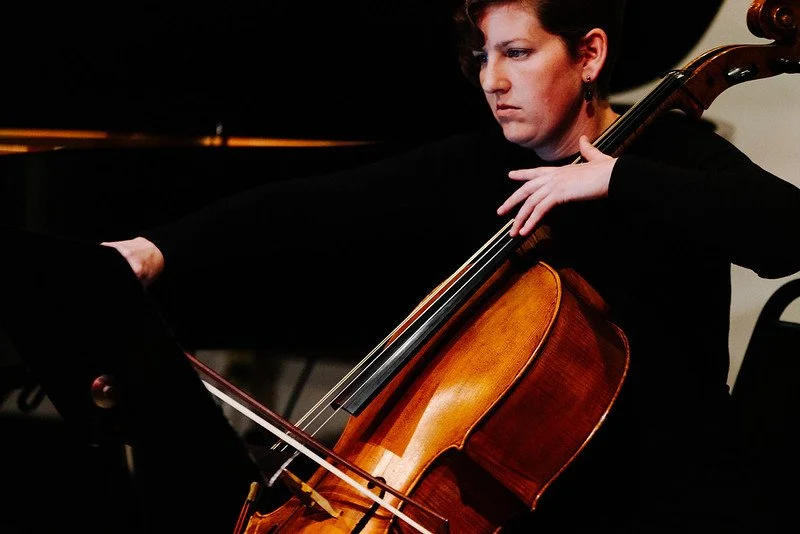
Rebeccah Parker Downs Downs is a soloist, chamber musician, and teacher based in the Twin Cities. She has performed throughout the United States and Europe, including appearances with orchestra performing the Lalo Cello Concerto, Elgar Cello Concerto, and Faure Elegie. She is a member of the Mill City String Quartet and also frequently performs chamber music with her husband, Benjamin Downs. They have appeared together at the WMP Concert Hall (NYC), Music Festival of Lucca (Italy), Linton Chamber Music Series (OH), Chautauqua Music Festival (NY), 113 Composer Collective (MN), and others. Rebeccah frequently performs as an orchestral and chamber music musician in the Twin Cities with An Opera Theatre, 113 Composer Collective, Duluth Superior Symphony, Mankato Symphony, South Dakota Symphony, Minnesota Chorale, Des Moines Symphony, American Opera Project, and others. When not performing, she teaches cello privately, at Northern Lights School for Strings. Rebeccah has a Master's and Artist Diploma from the University of Cincinnati College-Conservatory of Music.
Shannon Wettstein
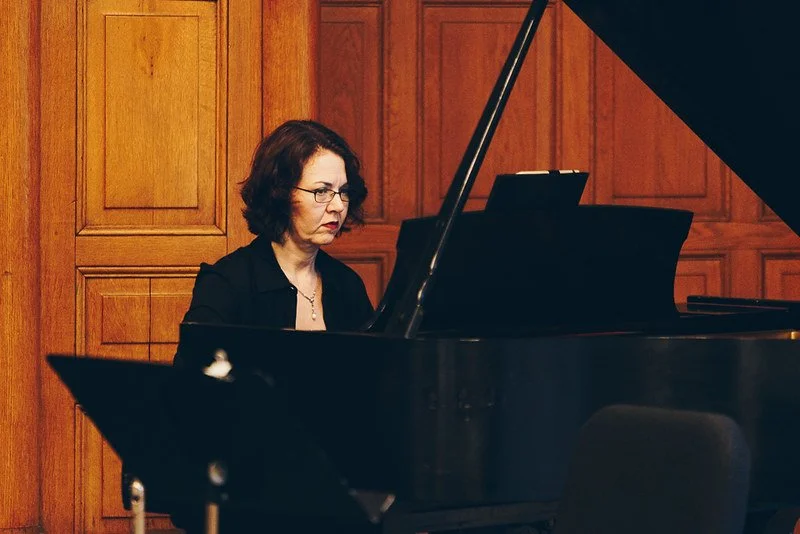
Pianist Shannon Wettstein invites audiences to hear connections between the most daring new music and historical masterworks. About why she makes music, “For me, it’s about taking risks—I love taking audiences along with me into unknown territory.”
With over 450 premieres, Shannon has performed at Lincoln Center, the Los Angeles Philharmonic’s Green Umbrella Series, the Ft. Worth Modern Art Museum, and Chicago’s Constellation. Steve Smith of the New York Times wrote that her performance at The Stone was “full of subtleties no recording could catch...a reminder of why we attend concerts.”
Her latest solo recording, Con Grazia, was recently released to wide acclaim on the Neuma label. Con Grazia is the culmination of Shannon’s long-term exploration of the music of the Italian avant-garde. German music publication AM:PLIFIED says, “Wettstein doesn’t simply play these works—she illuminates them, makes their micro-gestures sparkle, and takes listeners on an acoustic journey through time where old and new wink at each other.”
Recent performances include Hong Kong’s City Hall, the Matik Matik in Bogotá, and the Camerata of Cremona, Italy. Awards include those from the National Endowment for the Arts, American Composers Forum, and Chamber Music America.
Formerly the pianist of Boston’s Auros Group for New Music and Minnesota’s Zeitgeist New Music, Shannon continues to collaborate with other musicians pushing the envelope of possibilities, including saxophonist Kyle Hutchins, flutist Elizabeth McNutt, and ensembles such as the Mivos Quartet and Fonema Consort.
Shannon’s teachers include Sequeira Costa at the University of Kansas, Stephen Drury at the New England Conservatory, and Aleck Karis at the University of California San Diego. Other significant teachers and coaches include Claude Frank and Ben Zander.
Shannon has been a professor of piano at Michigan State University, St. Cloud State University, Augsburg University, and Bemidji State University. With performances on four continents, she is a clinician, lecturer, coach, and the host of Dr. Avant-Garde, a podcast about moving the art of music forward in the 21st century.
Dalia Chin
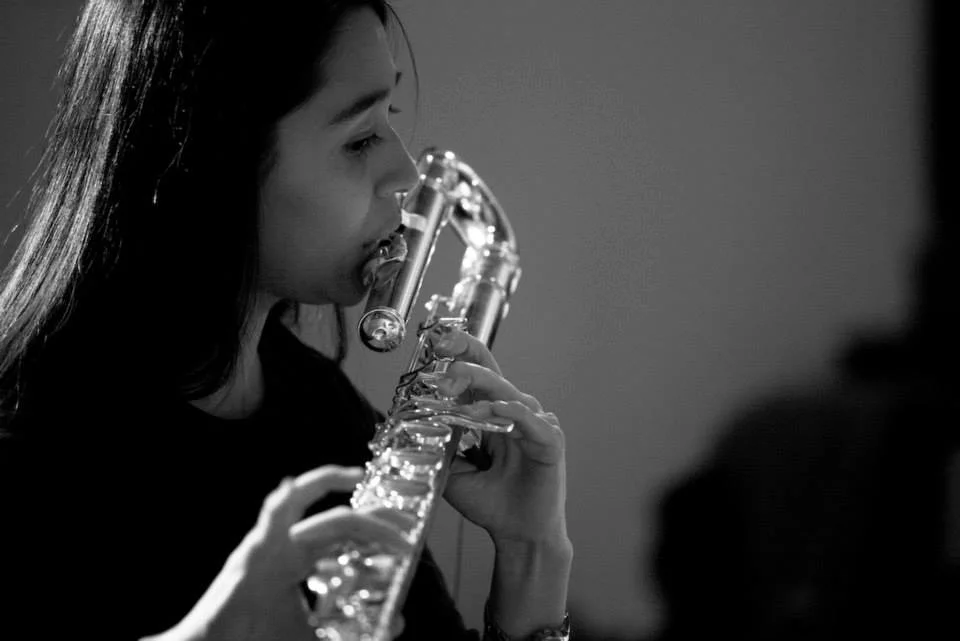
Chicago-based Costa Rican flutist Dalia Chin is a founding member of Fonema Consort and the Chicago Composers Orchestra, both of which are dedicated to performing music by living composers. She has been in residence and given performances at institutions including New England Conservatory, the University of Chicago, Northwestern University, Oberlin Conversarory, Harvard University, the Universidad de Costa Rica, Scripps College, UNAM (Mexico City), the University of Wisconsin-Whitewater, the 113 Composers Collective and North Central College. She has performed in festival and at venues including Visiones Sonoras (Morela), the Florida Flute Convention, Festival Interfaz (Monterrey), Omaha Under the Radar, the Ear Taxi Festival, the Festival Internacional de Chihuahua, the Museo Universitario de Arte Contemporaneo ( Mexico City), the Teatro Sucre (Quito), the City of Chicago’s Pritzker Pavilion, and National Sawdust.
She has performed Pablo Chin’s flute concerto Inside the Shell with the Chicago Composers Orchestra, the Costa Rica Orquesta Sinfónica de Heredia, and the University of Wisconsin Whitewater Orchestra. She is the featured soloist on the recently released album Three Burials (New Focus Recordings) which compiles the flute works of composer Pablo Chin. She can also be heard on Fonema Consort’s albums Pasos en otra calle (New Focus Recordings) and FIFTH TABLEAU (Parlour Tapes+).
Dalia works in close collaboration with composers as a soloist, with Fonema Consort and with the Chicago Composer’s Orchestra. Recent commissions and premieres include works by Stratis Minakakis, Pablo Chin, Fernanda Aoki Navarro, Francisco Castillo Trigueros, Bethany Younge, Julio Estrada, Monte Weber, and Tiffany Skidmore.
Dalia earned Post-Masters degree from DePaul University, her Masters in Music Performance at Florida State University, and her Bachelors Degree in Music Performance at the University of Costa Rica. Dalia is currently the program director for the Chicago Metamorphosis Orchestra Program, Director for the New Horizons Flute Choir at the Depaul Community Division. She has a private, Suzuki-certified studio in Chicago.
Émilie Fortin
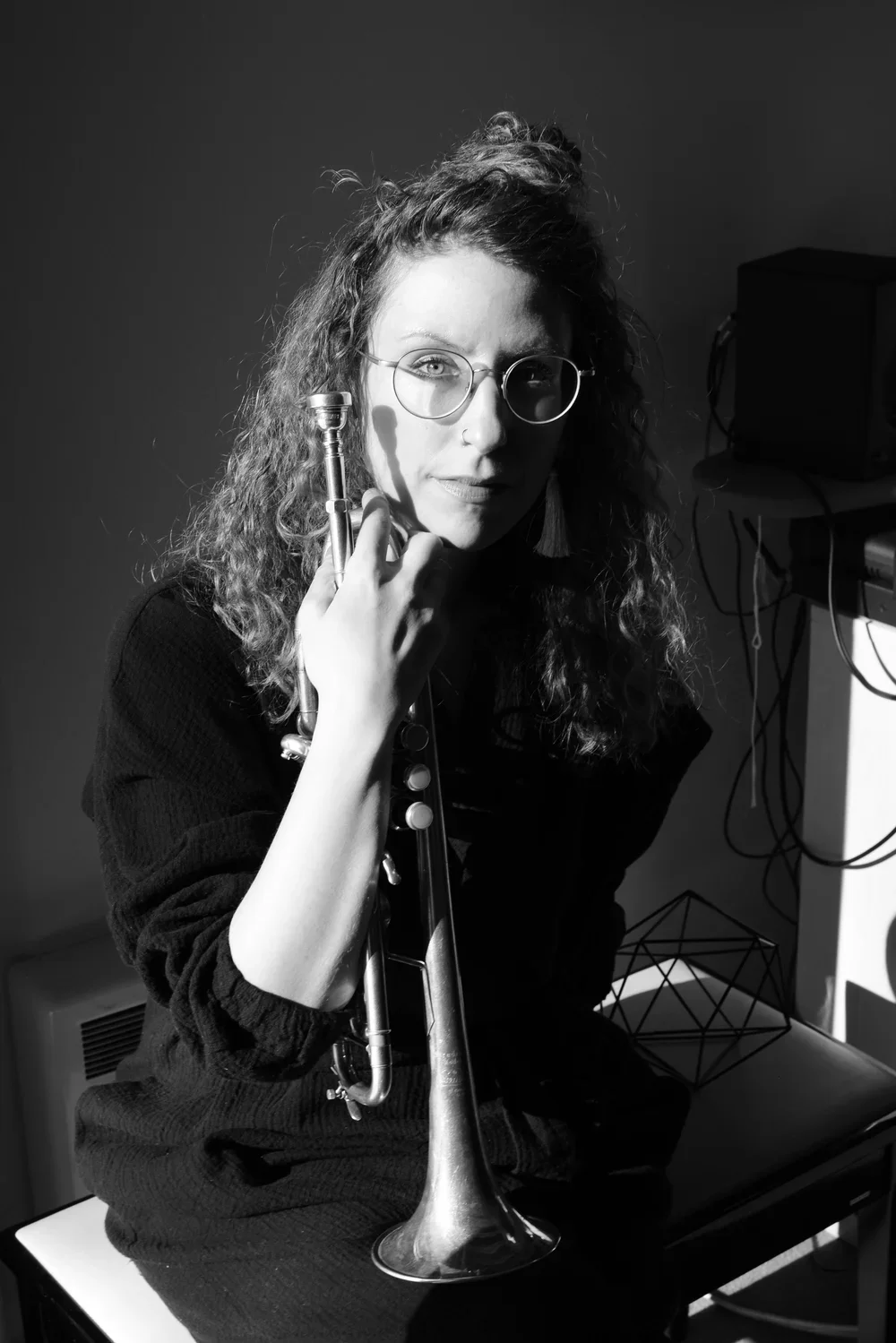
Photo Credit: Gabrielle Valevicius
Émilie Fortin is a trumpet player and interdisciplinary artist based in Montreal, whose practice combines new music, improvisation, and physical theater. Shaped by physical mime, clowning, and movement trainings (Omnibus, École Zani, Fondation Dr Clown, Meredith Monk), she navigates between experimental improvisation, contemporary jazz, and Quebec pop (Antoine Corriveau, Adam Kinner, Philémon Cimon).

Since 2018, she has been the artistic director of the Bakarlari soloists' collective, dedicated to contemporary and creative music that offers concert experiences that go beyond the traditional framework. To date, Émilie has commissioned and created more than fifty works, favoring work processes where research and human relationships take precedence over the finished product.

As a key figure in the contemporary music scene, Émilie performs regularly with the Ratchet Orchestra, the Ensemble SuperMusique, Freesound (Toronto), and is the founder of the Williwaw trio, with Philippe Lauzier and Kalun Leung, and the sound mime duo ék with Leung. Scott Thomson, artistic director of FIMAV, highlighted “her sonic clarity and inventive asymmetrical phrasing” as an improviser, and she was nominated for the 2025 Opus Discovery of the Year Award.

Her performances have taken her to international stages, including soundSCAPE (Italy), the UNHEARD Sound Festival (Hong Kong), Re:Sound (Cleveland), and the Oh My Ears Festival (Arizona). She has studied with members of the International Contemporary Ensemble, Ensemble Musikfabrik, Ensemble Modern, and Vinko Globokar, and has performed with the Nouvel Ensemble Moderne, GGRIL, Array Ensemble (Toronto), and Alkali Collective (Halifax).

Émilie's commitment extends far beyond the stage. As a passionate advocate for representation in brass music and the democratization of contemporary and improvised music, Émilie has presented at the IRCAM Forum 2021, UQAM (Gender Differences and Inequalities in Music in Quebec), the International Women's Brass Conference, The College Music Society (Colombia), and the Canadian League of Composers. She is also a founding member of the Burning Brass Band, the first ensemble dedicated to increasing the presence of women, trans, non-binary, and queer people in the Montreal brass band scene.

Émilie also co-created the concerto Trois milieux with composer Sophie Dupuis, intended for non-professional ensembles, bringing the contemporary music of a living composer beyond institutional settings.

Firmly believing that teaching is inseparable from performance, she has taught at various high schools and music camps in the Montreal area and has led numerous international community teaching projects, notably in Haiti, Bolivia, Chile, Panama, and the United States through The Global Leaders program.

A graduate in classical performance from the University of Montreal and McGill University, Émilie Fortin has carved out a path for herself that is “full of derision and delightfully iconoclastic” (Jérôme Daviau, sorstu.ca).

Whether as a soloist on Émile Proulx-Cloutier's album Ma main au feu, collaborating with Hugo Blouin (Du jazz sérieux), or as a composer with the Instruments of Happiness ensemble, directed by Tim Brady, she displays a unique artistic voice, demonstrating a versatility that defies easy categorization.
Text Translation
PIERROT LUNAIRE
Original Text by Albert Giraud
German Version by Otto Erich Hartleben
English Translation of the German by Anthony R. Green
Note: the order of these poems does not reflect the original French order
I. Moon Drunk
Nightly, the moon pours down, in waves, a wine that the eyes drink.
And a spring flood overtakes the peaceful horizon.
Innumerable sweet and ghastly desires swim within the flood.
Nightly, the moon pours down, in waves, a wine that the eyes drink.
Driven by powerful devotion, the poet becomes intoxicated with this holy drink.
Enraptured, he twists his head towards the heavens, and dizzily sucks and slurps up
that wine that the eyes drink.
Note: “Der Dichter” in this sense also appears in XIV. Die Kreuze
II. Columbine
The moonlight’s pale blossoms – those wonderous white roses –
bloom during those July nights. Oh, I’ll pick just one!
To quell my anxious sorrows, I search the dark currents
for the moonlight’s pale blossoms – those wonderous white roses!
All my longings would disappear if only I could – as if I were in a fairytale –
clip the petals in such a way where they would lie blissfully on your brown hair …
… those petals from the moonlight’s pale blossoms!
Note: while unclear, the first person in this text is most likely Pierrot, who has a crush on Columbine. Traditionally, Columbine is in love with Harlequin, and Pierrot is in love with Columbine, but it is unrequited.
III. The Dandy
With a phantasmagorical beam of light,
the moon illuminates the crystal perfume bottles
of the silent Bergamo dandies
that sit on the black, most holy washbasin.
In the resonant sink, the faucet water brightly laughs, metallic noises!
With a phantasmagorical beam of light, the moon illuminates crystal perfume bottles.
With a waxen countenance, Pierrot stands in contemplation and thinks to himself :
How will I make up my face today?
He shoves aside the Red and the Orient Green, and paints his face in a lordly style
with a phantasmagorical beam of light.
Note: the traditional face of Pierrot (Pedrolino in Italian) is not masked, rather painted white. He is a first order comic servant, and wears white clothing as well.
IV. A Pale Washerwoman
Through the night, a pallid washerwoman washes faded rags.
Into the waters below, she stretches her bare, silvery arms.
Wind creeps through the clearing, gently moving the waters.
Through the night, a pallid washerwoman washes faded rags.
And, sweetly caressed by the trees, the gentle, heavenly virgin
stretches her light-woven linens upon the dark meadows –
this pallid washerwoman.
Note: in Commedia dell’arte, la vecchia (the old women) sometimes appear washing clothes in nature. If in groups, doing domestic work is a good time to gossip to each other.
V. A Chopin Waltz
Just as a light drop of blood colors the lips of a sick person,
so lies within these pitches a destruction-addicted appeal.
Wild craving-chords disturb this icy desperation dream –
just as a light drop of blood colors the lips of a sick person.
Melancholic dark waltz, burning and jubilant, sweet and yearning :
It never escapes my senses!
It adheres to my thoughts like a light drop of blood!
Note: another text where the first person is unclear, Pierrot is a strong contender for this. Many people play physical pranks on Pierrot. Perhaps this trickery drives him crazy.
VI. Madonna
Oh mother of all pain and suffering, step upon the altar of my verse!
The sword’s fury hath spilled blood from your withered bosom.
Your eternally fresh wounds are reminiscent of eyes : red and open.
Oh mother of all pain and suffering, step upon the altar of my verse!
In your emaciated hands, you hold the body of your dead son to show to all the world –
but the gaze of the world avoids you, oh mother of all pain and suffering!
Note: one curious note about much of these poems is the strong inclination towards religion and religious imagery. The commedia dell’arte tradition was viewed unfavorably by the church, primarily because of its crass physical humor, bold tackling of taboo themes, and the inclusion of women as performers. In this text, Mary is referenced, and the last stanza is one of the most powerful Pietà images in existence. The “Verse” in this text may also be the “Verse” in XIV. Die Kreuze. In this way, the “altar of my verse” means “an altar of the crosses, which carry poets (Dichter) who bleed in silence”. The original is less religious, indicating some agenda-influence from Hartleben.
VII. The Sick Moon
You nocturnal, deathly sick moon, lying there upon heaven’s black cushion.
Your gaze, so feverishly intense, grips me like a strange melody.
You’re dying from an unquenchable sorrow of love,
wholly suffocated by longing,
you nocturnal, deathly sick moon, lying there upon heaven’s black cushion.
The play of your moonbeams – your milky moon blood birthed from torment –
amuses the lover, who, in a sensual orgy, wanders aimlessly towards another lover.
You nocturnal, deathly sick moon!
Note: this is part of a subset of text in this collection that focus on the moon. This particular text also connects to XIII. Enthauptung.
VIII. Night
Sinister giant black moths are destroying the rays of the sun.
The horizon remains as idle and secretive as a closed book of magic spells.
From the smoldering embers of lost depths,
an aroma is slowly climbing upwards, murdering the existence of memory!
Sinister giant black moths are destroying the rays of the sun.
Sinking down towards the earth from the heavens, these invisible monstrosities,
with their heavy undulations, settle upon the hearts of mankind …
Sinister giant black moths.
Note: a more atmospheric text, perhaps these invisible monsters are the cause for mankind’s lack of empathy (referenced in VI. Madonna). Additionally, there is a subset of texts that comment upon “the horizon”, which includes I. Mondestrunken and XX. Heimfahrt.
IX. Prayer to Pierrot
Pierrot! I’ve unlearned my ability to laugh!
The image of splendor dissolved … dissolved!
From the mast, it seems to me that the flag is waving jet black.
Pierrot! I’ve unlearned my ability to laugh!
Oh steed physician of the soul, lyrical snowman, serene highness of the moon, Pierrot …
Make it so that I can laugh again!
Note: it is unclear who the narrator is in this text, but it is, quite possible, “Der Dichter”.
X. Thievery
Red rubies of royalty – blood drops of ancient glories –
shimmer in the shrines of the dead amongst burial vaults hidden in the deep.
Nightly, Pierrot and his drinking buddies swoop down to rob those
red rubies of royalty – blood drops of ancient glories.
LOOK OVER THERE! Their hairs are standing on end, they become paralyzed by fear;
Through the darkness, like eyes, they see – staring out of the shrines of the dead –
red rubies of royalty!
Note: a text that speaks of Pierrot’s mischief.
XI. Red Mass
Amidst the gold’s blinding gleam and the flickering light of candles,
Pierrot approaches the altar for a gruesome Eucharist.
The hand of the officiant, consecrated by God, tears his priestly vestments to shreds,
for a gruesome Eucharist, amidst the gold’s blinding gleam.
With a gesture of benediction,
he reveals the dripping red Blessed Sacrament to the frightened souls:
upon his bloody fingers, his heart,
for a gruesome Eucharist!
Note: while some of the religious references in Pierrot Lunaire are aligned with the church, this text is quite disturbing. In the original French, Pierrot is actually escaping this scene. Perhaps Hartleben has Pierrot participate in this carnal ritual to provide consistency with some of the other shenanigans that Pierrot gets into in this collection.
XII. Song of the Gallows
The lanky lassie with a long neck will be his last beloved.
She sticks in his brain like a nail, this lanky lassie with a long neck.
Slender like a pine tree, with a little pigtail below her throat,
salaciously she’ll strangle the little rascal,
that lanky lassie!
Note: this text is about (presumably) Pierrot getting hanged. “Die dürre Dirne” is a hangman’s noose. “In seinem Hirne steckt wie ein Nagel” refers to Pierrot only thinking about being hanged as the noose is being prepared. The original poem is titled “The Slender Harlot”, which completely alters Hartleben’s meaning. However, the switch to reference being hanged is a prequel to the next text, XIII. Enthauptung.
XIII. Beheading
The ghostly large moon – a white Turkish sword upon a black, satin pillow –
It looms threateningly through the painfully dark night.
Pierrot restlessly wanders around, and with deathly fear stares upwards towards the moon :
a white Turkish sword upon a black, satin pillow.
His knees start to buckle. Powerlessly he suddenly faints.
Unconscious, he sees his punishment:
already barreling down towards his wretched neck,
the moon – a white Turkish sword.
Note: this powerful image of a crescent moon – which resembles a scimitar – beheading Pierrot takes place in Pierrot’s subconscious, while he’s passed out because of his fear of the moon … and also perhaps a fear of his own sinful ways. “Wähnen” means “to imagine, usually mistakenly or illogically”.
XIV. The Crosses
Stanzas are holy crosses on which, while upon them, poets silently bleed,
struck blind by the ghostly swarm of flapping vultures!
Within the bodice, swords take delight, flaunting in the scarlet of the blood!
Stanzas are holy crosses on which, while upon them, poets silently bleed.
Lifeless head, solidified locks of hair –
In the distance, the uproar of the commoners drifts away.
The sun, a red crown fit for a king, slowly sets.
These stanzas are holy crosses!
Note: this is another religiously-oriented poem, lying in between something religiously aligned and something sacrilegious. “Der Dichter” is non-specifically referenced, and also compared to Jesus … perhaps “Der Dichter” is the dead body in “Madonna”, dead from silently bleeding on the cross, primarily through the devotion to the craft (I. Mondestrunken).
XV. Homesickness
Dulcetly plaintive, a crystalline sigh from Italy’s olden pantomime audibly arrives :
Pierrot has become so wooden, so trendily sentimental.
And it rings through the desert of his heart, it’s echo muted by his senses.
Dulcetly plaintive, a crystalline sigh from Italy’s olden pantomime.
Then Pierrot forgets his dour countenances!
Through the pale fiery gleam of the moon,
through the sea of light’s deluge – longing is boldly swept upwards,
upwards towards a heavenly home,
dulcetly plaintive, a crystalline sigh!
Note: “Italy’s olden pantomime” here means “commedia dell’arte”. These texts were written upon the foundation of French pantomime, which is directly related to commedia dell’arte, but is not as old. I imagine Hartleben added some German pantomime influence into his translation.
XVI. Cheekiness
Sweetly, with hypocritical kindness, Pierrot uses a trepan to drill into Cassander’s bare head –
his screams rip through the air!
Afterwards, he uses his thumb to stuff his authentic Turkish tobacco
into Cassander’s bare head – his screams rip through the air!
Then Pierrot screws a cherry wood pipe shaft in the back of the smooth, baldness,
and with ease smokes and puffs his authentic Turkish tobacco
from Cassander’s bare head!
Note: Cassander comes from the character “Pantalone” or “il Magnifico”, whose sometimes wife is La Signora (and she enthusiastically cuckolds him). Cassander is a grumpy older man, who is wealthy, but also easily falls pray to manipulation, as evinced in this morbid scene.
XVII. Parody
Knitting needles, shiny and twinkling, in her grey hair :
the duenna sits there in her little red skirt, mumbling.
She waits in the pergola; she loves Pierrot … with pangs of pain.
Knitting needles, shiny and twinkling, in her grey hair.
Then suddenly – hark! – a whisper!
A gentle whiff of wind softly snickers;
The moon, that evil mocker, with its light beams, mimics
knitting needles, twinkling and shining!
Note: a “duenna” is an older woman (una vecchia) who looks after younger women in a guardianship role. In this text, the duenna is most likely La Signora, the sometimes wife of Cassander (mentioned in the previous text). It is known that La Signora has affairs with Pierrot, but less known that she actually is in love with him … but this love causes her pain.
XVIII. The Moon Dot
A white dot, created by the bright moon, on the back of his black coat,
Pierrot strolls about in the temperate evening, in search of luck and adventure.
Suddenly something about his outfit disturbs him. He looks himself over, and surely finds it –
A white dot, created by the bright moon, on the back of his black coat.
Wait! he thinks : that’s a stain from plaster!
He wipes and wipes still – he can’t get it out!
And so he continues on, poisoned with annoyance, rubbing and rubbing till the early morn
that white dot, created by the bright moon!
Note: a silly little gem. I wonder where Pierrot was for him to be around plaster? Plaster is also used to create casts that heal broken bones …
XIX. Serenade
With giant, grotesque bowing movements, Pierrot grates on his viola.
Like a stork on one leg, he snaps out a cloudy pizzicato.
Suddenly Cassander approaches – irritated on account of the nocturnal virtuoso –
with giant, grotesque bowing movements, Pierrot grates on his viola.
He throws his viola down; with his delicate left hand, he grasps the hairless man by the collar –
dreamily, he plays the bald head like an instrument, with giant grotesque bowing movements.
Note: in my translation, I take advantage of the lack of an article to create an image of Pierrot obnoxiously bowing the viola rather than playing the viola with a giant bow. This might be controversial. Even the original French is ambiguous : “D’un grotesque archet dissonant …”, here “archet” could be the actual bow object, but it can be a bow stroke, such as an up-bow or down-bow.
XX. Homeward Bound
The moonbeam is the steering system, waterlilies play the role of the boat:
Upon them, Pierrot travels south with good wind.
The currents hum low scale-like melodies and rock the little seacraft.
The moonbeam is the steering system, waterlilies play the role of the boat.
Towards Bergamo, homeward, now Pierrot is returning.
In the east, dawn’s green horizon is already faintly breaking.
The moonbeam is the steering system.
Note: while the town of Bergamo does not have a body of water running through it (especially near the citta alta), the Serio river does run through the Bergamo province. In sum, it is possible to sail (with an absurd waterlily boat) to Bergamo. “Das Ruder” has a double meaning of “rudder and oar, which is why I decided to translate this as “steering system”.
XXI. Oh Ancient Fragrance
Oh, ancient fragrance from the times of fairytales,
once more you intoxicate my senses!
A clownish joker of devilments buzzes through the easy air.
A fortunate granting of a wish has made me happy about joys which I have long despised.
Oh, ancient fragrance from the times of fairytales – you’re intoxicating me again!
I surrender all my resentment; from my sun-framed window, I’m contemplating this dear world,
and, out there, in faraway blessed expanses, I am dreaming …
Oh, ancient fragrance from the times of fairytales!
Note: Pierrot is home, and things that annoyed him for years are now providing him with pleasure/joy. The ancient fragrances might be an allusion to “die krystallnen Flakons” in III. Der Dandy.